Product Description
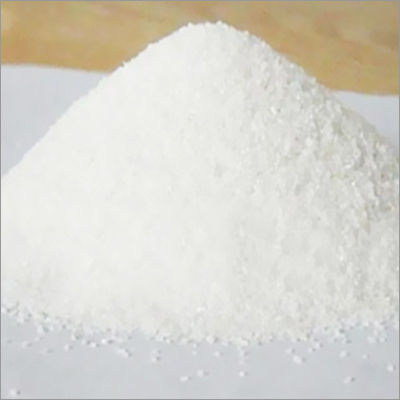
To establish a prominent presence in the market, we are engaged in offering our clients Alumina Powder (Refactory Grade). It is a refractory product that has high insulating capacity. It hence has maximum usage for insulating purpose by refractory industries in all the country. This powder is offered in several grades for industries such as lapping, polishing and metallurgical lab applications. Alumina Powder (Refactory Grade) goes through various quality inspections to ensure its purity, safe usage, effectiveness and a long life. This makes this powder all the more demanded in the market. We offer this at highly affordable prices.
Features:
- High melting point
- White crystalline powder
- Highly stable
High Purity and Thermal StabilityWith an alumina content of 97.5%99% and Mohs Hardness of 9, this powder delivers outstanding resistance to chemical attack and abrasion, making it ideal for demanding industrial applications. Its high melting point ( 2050C) and low porosity ensure excellent performance and reliability at elevated temperatures.
Customizable Grain Size for Versatile ApplicationsThe grain size of less than 100 microns is fully customizable, catering to a range of applications in the refractory industry. Whether used in bricks, castables, or linings, the fine and uniform distribution ensures optimal mixing, mechanical strength, and a smooth surface finish.
Quality Packaging and Long Shelf LifeAvailable in robust 25 kg or 50 kg HDPE bags, Alumina Powder retains its quality and moisture content for up to 12 months when stored in sealed packaging. This extended shelf life provides predictable performance and convenience for industrial users.
FAQs of Alumina Powder (Refactory Grade):
Q: How is Alumina Powder (Refractory Grade) used in high-temperature industries?
A: Alumina Powder is mixed with binders and aggregates to manufacture refractory bricks, castables, and high-temperature furnace linings. Its high purity and thermal stability make it essential in steel, cement, glass, and petrochemical industries where exposure to elevated temperatures and corrosive environments is common.
Q: What benefits does this refractory alumina powder offer over other raw materials?
A: This alumina powder offers superior mechanical strength at high temperatures, excellent dimensional stability, and low thermal conductivity. Its low porosity and water absorption, coupled with high chemical purity, enhance refractory performance and insulation, ensuring longer equipment life and reduced maintenance.
Q: When should I use customized grain sizes of this alumina powder?
A: Customizable grain sizes are recommended when specific flowability, compaction, or surface finish properties are required in the final refractory product. Smaller grains improve homogeneity for dense applications like specialized castables, while coarser grains can be used in applications needing greater porosity or thermal shock resistance.
Q: What is the proper method for storing Alumina Powder to maintain its quality?
A: Alumina Powder should be stored in its original, sealed HDPE packaging in a dry, cool area to prevent moisture absorption. Proper storage conditions will preserve its shelf life of up to 12 months and maintain its low moisture content and chemical stability.
Q: Where can this Alumina Powder (Refractory Grade) be sourced from?
A: This product is available through exporters, manufacturers, suppliers, and traders in India. It can be supplied in bulk quantities domestically and internationally for various industrial applications.
Q: What process should be followed to achieve optimal results in refractory manufacturing?
A: Carefully weigh and blend the alumina powder with other refractory components according to formulation requirements. Ensure the grain size matches application needs and follow standard mixing and molding procedures to achieve uniformity, density, and mechanical strength. Proper curing and firing will further enhance performance.
Q: How does the chemical stability and minimal water absorption benefit refractory products?
A: The powders chemical stability prevents reactions with corrosive slags and gases, while low water absorption (<1%) reduces drying defects and porosity. These attributes improve durability, resistance to thermal cycling, and overall life span of the refractory components.








 Send Inquiry
